


Loneliness is now treated as a public health crisis. About half of U.S. adults report feeling lonely, the U.S. Surgeon General has compared its health toll to smoking 15 cigarettes a day, and young adults and men report some of the highest rates of all. This page collects more than 40 loneliness statistics on how common it is, who is most affected, the health effects, and the male loneliness epidemic, drawn from the U.S. Surgeon General, Gallup, Meta-Gallup, Cigna, and peer-reviewed research. Every figure is written as a single quotable line with its source and year, so each one can stand on its own.
Key Loneliness Statistics
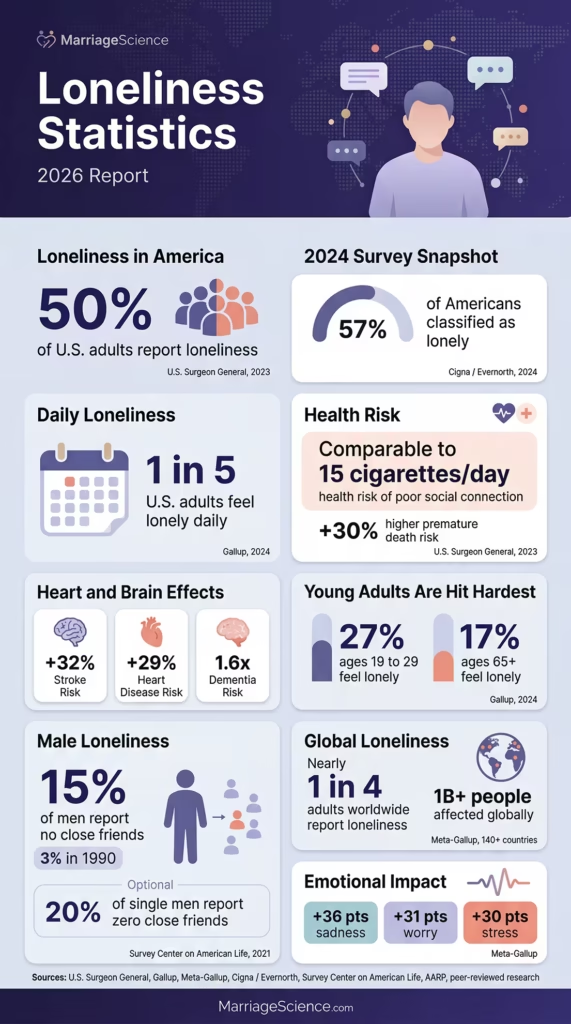
- About 50% of U.S. adults report experiencing loneliness (U.S. Surgeon General, 2023).
- In a 2024 survey, 57% of Americans were classified as lonely (Cigna / Evernorth, Loneliness in America 2025).
- About 1 in 5 U.S. adults experiences loneliness daily (Gallup, 2024).
- Loneliness and poor social connection carry a health risk comparable to smoking 15 cigarettes a day (U.S. Surgeon General, 2023).
- Loneliness raises the risk of premature death by about 30% (U.S. Surgeon General, 2023).
- Poor social connection is linked to a 32% higher risk of stroke and a 29% higher risk of heart disease (U.S. Surgeon General, 2023).
- Loneliness is associated with roughly 1.6 times higher risk of developing dementia (peer-reviewed meta-analyses).
- About 15% of men report having no close friends, up from 3% in 1990 (Survey Center on American Life, 2021).
- About 20% of single men report having zero close friends (Survey Center on American Life).
- About 40% of men say they feel lonely at least once a week (survey, 2024).
- Single men are about three times more likely to report loneliness than married men (survey, 2024).
- The share of 12th-grade boys who often feel lonely rose from 28% in 2000 to 35% in 2019.
- Young adults aged 18 to 34 report the highest loneliness of any age group (Gallup, 2024).
- About 27% of adults aged 19 to 29 feel lonely, versus 17% of those 65 and older (Gallup, 2024).
- Nearly 1 in 4 adults worldwide, more than a billion people, report feeling lonely (Meta-Gallup, 140+ countries).
- About 23% of people globally felt lonely a lot of the previous day (Gallup).
- Lonely people are 36 points more likely to feel sadness and about 31 and 30 points more likely to feel worry and stress (Meta-Gallup).
- The Cigna survey behind the 57% figure polled more than 7,500 U.S. adults (2024).
- Social isolation is associated with about $6.7 billion in additional annual Medicare spending (AARP analysis).
How Common Is Loneliness?
Loneliness is widespread and rising. About 50% of U.S. adults report experiencing it, according to the U.S. Surgeon General (2023), and a 2024 Cigna survey of more than 7,500 adults put the figure at 57%.
Daily loneliness is common too. Gallup found that about 1 in 5 U.S. adults feels lonely on any given day (2024). The exact number varies by how each survey asks the question, but every major source lands in the same range: roughly half of adults feel lonely at least sometimes.
For related shifts in connection, see our Gen Z dating statistics and the full relationship and dating statistics hub.
| Metric | Value | Source |
| U.S. adults reporting loneliness | ~50% | U.S. Surgeon General, 2023 |
| Americans classified as lonely | 57% | Cigna / Evernorth, 2024 |
| U.S. adults lonely daily | ~1 in 5 | Gallup, 2024 |
The Loneliness Epidemic: Why It Is Called One
The label is official. On May 2, 2023, the U.S. Surgeon General released an 81-page advisory titled Our Epidemic of Loneliness and Isolation, the first time the office had treated social disconnection as a national health emergency.
The framing that drew attention was the comparison to smoking. The advisory found that poor social connection carries a health risk on par with smoking up to 15 cigarettes a day, and that loneliness raises the risk of premature death by about 30%.
The economic toll is real as well. Social isolation is associated with an estimated $6.7 billion in additional Medicare spending each year (AARP analysis), before counting the costs to private insurers and employers.
| Metric | Value | Source |
| Surgeon General advisory released | May 2, 2023 | U.S. Surgeon General |
| Health risk comparable to | Smoking 15 cigarettes a day | U.S. Surgeon General, 2023 |
| Premature death risk | +~30% | U.S. Surgeon General, 2023 |
| Added annual Medicare spending | ~$6.7 billion | AARP analysis |
The Health Effects of Loneliness
Loneliness is not only a feeling; it tracks with measurable physical and mental harm. The major documented effects include:
- Premature death risk up about 30% (U.S. Surgeon General, 2023)
- Stroke risk up 32% and heart disease risk up 29% (U.S. Surgeon General, 2023)
- Dementia risk roughly 1.6 times higher (peer-reviewed meta-analyses)
- Higher rates of depression and anxiety (U.S. Surgeon General, 2023)
- Lonely people 36 points more likely to feel sadness (Meta-Gallup)
These risks are part of why public health officials treat loneliness as seriously as diet or smoking. The effects compound over time, and they hit hardest among people who are isolated for years rather than weeks.
The Male Loneliness Epidemic
Men are at the center of the loneliness story. About 15% of men report having no close friends, up sharply from just 3% in 1990 (Survey Center on American Life, 2021), and among single men the figure reaches about 20%.
Loneliness is frequent, not occasional. Around 40% of men say they feel lonely at least once a week (2024), and single men are about three times more likely to report loneliness than married men. The trend starts young: the share of 12th-grade boys who often feel lonely rose from 28% in 2000 to 35% in 2019.
Men are also less likely to seek help or build new friendships, which deepens the gap. For one increasingly common response to that isolation, see the best AI girlfriend apps that market themselves on companionship.
| Metric | Value | Source |
| Men with no close friends, 2021 | ~15% | Survey Center on American Life |
| Same figure in 1990 | 3% | Survey Center on American Life |
| Single men with zero close friends | ~20% | Survey Center on American Life |
| Men feeling lonely weekly | ~40% | Survey, 2024 |
| 12th-grade boys often lonely, 2000 to 2019 | 28% to 35% | Monitoring the Future |
Gen Z and Young Adult Loneliness
Loneliness is highest among the young, not the old. Young adults aged 18 to 34 report the highest loneliness of any age group, with about 27% of those 19 to 29 feeling lonely, compared with 17% of those 65 and older (Gallup, 2024).
The pattern overturns the usual assumption. While isolation among the elderly is a serious concern, survey after survey now finds that the loneliest group is people in their late teens and twenties, the same group stepping back from dating and in-person socializing.
The causes overlap with falling friendship and dating. Young adults spend less time with friends in person than any recent cohort, and many describe feeling disconnected even while constantly online.
| Metric | Value | Source |
| Loneliest age group | 18 to 34 | Gallup, 2024 |
| Adults 19 to 29 feeling lonely | ~27% | Gallup, 2024 |
| Adults 65+ feeling lonely | ~17% | Gallup, 2024 |
Elderly and Senior Loneliness
Older adults still face real isolation, especially after retirement, widowhood, or loss of mobility. About 17% of adults 65 and older report loneliness (Gallup, 2024), and the risks they face are severe because isolation compounds existing health problems.
The dementia link is strongest here. Loneliness is associated with roughly 1.6 times higher risk of developing dementia (peer-reviewed meta-analyses), which makes social connection a genuine factor in healthy aging.
Practical factors drive senior loneliness, including living alone, the death of a spouse, and reduced mobility. Regular social contact and community programs are among the few interventions shown to help.
| Metric | Value | Source |
| Adults 65+ reporting loneliness | ~17% | Gallup, 2024 |
| Dementia risk with loneliness | ~1.6x higher | Peer-reviewed meta-analyses |
Loneliness by Gender: Male vs Female
Both men and women report loneliness, but the shape differs. Women are more likely to report and discuss loneliness on surveys, while men are more likely to be socially isolated with no close friends and less likely to seek connection.
The friendship gap is the clearest divide. Men have seen the steeper decline in close friendships since the 1990s, which is why the male loneliness epidemic has become its own area of research even though women report loneliness at similar or higher rates on some measures.
Coping differs too. Women are more likely to lean on friends and family, while men more often withdraw, which can turn isolation into a self-reinforcing cycle.
Global Loneliness
Loneliness is a worldwide trend. Nearly 1 in 4 adults across more than 140 countries report feeling lonely, which translates to more than a billion people (Meta-Gallup), and about 23% say they felt lonely a lot of the previous day.
The emotional toll is consistent across borders. Lonely people are 36 points more likely to feel sadness and about 31 and 30 points more likely to feel worry and stress than people who are not lonely (Meta-Gallup), a pattern that holds in rich and poor countries both.
Younger people are the loneliest worldwide, not the oldest. The Meta-Gallup data found loneliness highest among adults under 30 across most regions, mirroring the pattern in the United States.
| Metric | Value | Source |
| Adults worldwide feeling lonely | Nearly 1 in 4 | Meta-Gallup, 140+ countries |
| People affected globally | 1 billion+ | Meta-Gallup |
| Felt lonely a lot of the previous day | ~23% | Gallup |
Loneliness, Marriage, and Relationships
Relationships are one of the strongest buffers against loneliness. Married and partnered adults consistently report lower loneliness than single adults, and single men are about three times more likely to feel lonely than married men (2024).
The link runs both ways. Loneliness makes dating and commitment harder, while strong relationships reduce it, which is why the loneliness epidemic and the decline in marriage and dating are so closely tied. See our sexless marriage statistics for the relationship side of the trend.
| Metric | Value | Source |
| Single men vs married men loneliness | ~3x more likely | Survey, 2024 |
| Partnered adults | Report lower loneliness | Gallup / Cigna |
What Is Driving the Loneliness Epidemic
There is no single cause, but the drivers overlap. People spend far less time together in person than they did two decades ago, work and socializing have moved online, and community institutions that once brought people together have weakened.
Technology plays a double role. Phones and social media keep people connected at a distance while crowding out face-to-face contact, and remote work has removed a daily source of casual social interaction for millions. The result is more contact and less connection.
The decline in face-to-face time is measurable. Average weekly in-person social time among young adults has fallen by roughly half since 2010, one of the clearest signals behind the loneliness numbers.
Loneliness, Dating, and AI Companions
Loneliness and the decline in dating feed each other. As young adults date and partner less, many spend more time alone, and isolation in turn makes the effort of dating feel harder, a loop visible in our Gen Z dating statistics.
One response is technological. A growing number of lonely people, especially younger men, are turning to AI companions and chatbots for conversation and comfort, a market built directly on the loneliness numbers above and covered in our reviews of the best AI girlfriend apps.
Whether AI companionship helps or deepens isolation is still debated. It can ease short-term loneliness, but researchers warn it may also substitute for the human relationships that protect mental health over the long run.
Methodology and Sources
Every figure on this page comes from a named primary source, not from content-marketing roundups. Health-risk figures come from the U.S. Surgeon General advisory and peer-reviewed meta-analyses. Survey figures name the polling organization and year. Figures are updated as new data is released.
- U.S. Surgeon General, Our Epidemic of Loneliness and Isolation (2023)
- Gallup and Meta-Gallup State of Social Connections global loneliness data
- Cigna / Evernorth, Loneliness in America (2024)
- Survey Center on American Life, friendship surveys
- Peer-reviewed meta-analyses on loneliness and dementia
- AARP analysis of Medicare costs