

You might be here because you have felt attracted to men, women, and people outside the binary, but pansexual never felt quite right because gender still matters in how attraction feels to you. Or you may be a friend, partner, or parent trying to understand someone who uses the term omnisexual for themself.
Omnisexual means being attracted to people of all genders, while gender still plays a part in that attraction.
Omnisexual is a recognized label under the bi+ umbrella, which includes people who feel attraction to more than one gender in different ways. You can use omnisexual alongside labels such as bisexual or queer, and many people use it for years without feeling the need to defend it.
This page explains what omnisexual means, how it differs from pansexual and bisexual, how gender preferences can fit, signs the label may suit you, and what the omnisexual flag represents. It also looks at what research does and does not tell us about omnisexual people, so you can separate the orientation itself from myths and outside pressure.
Key Takeaways
Here are the basics before we get into the details.
- Omnisexual means attraction to all genders, with gender still shaping how that attraction feels, appears, or is understood by the person using the label.
- Pansexual is often described as gender-blind, and omnisexual as gender-aware. That is usually the main distinction when people compare the two labels.
- Many omnisexual people have a gender preference. Having one does not make the label wrong, less real, or something that needs extra proof.
- Omnisexual sits under the bi+ umbrella alongside bisexual, pansexual, and polysexual. These labels can overlap while still describing different experiences.
- The omnisexual flag has five stripes: light pink, pink, dark purple, blue, and light blue. The design dates to 2015.
What Does Omnisexual Mean?
Omnisexual means being attracted to people of all genders. “Omni” comes from the Latin word for “all,” which is why the term points to attraction that can include every gender.
The key idea here is being “aware” of gender.
For omnisexual people, gender is noticeable and can shape attraction in meaningful ways. It can affect how the attraction feels, how strong it is, or what draws someone to a person.
This is what often separates omnisexual from pansexual for people who use the terms differently. Some people use omnisexual and pansexual as synonyms.
Others use them to describe different experiences. Both approaches exist, and each person can choose the word that feels right for them.
The noun for the orientation is omnisexuality. Some people also shorten omnisexual to “omni.”
The label only describes attraction.
It does not tell you how many partners someone has, whether they are dating, or who they have dated. An omnisexual person can have any dating history, including no dating history at all.
Omnisexual vs Pansexual: The Real Difference
Both omnisexual and pansexual can describe attraction to all genders. The difference usually comes down to the role gender plays in that attraction.
Casey Tanner, a clinical sex therapist, told Health, as quoted by Teen Vogue: “Pansexuality is more gender-blind, while with omnisexuality, gender influences the type or strength of attraction to each gender.”
For a pansexual person, gender may have little to do with why they feel drawn to someone. They may experience attraction across genders and see the person, connection, or chemistry as what stands out most.
An omnisexual person can also feel attraction to all genders, but gender may still influence the experience. It might affect the type or strength of attraction, or the way the person recognizes that feeling.
For example, a pansexual person might say their partner’s gender barely registers as part of the attraction. They know their partner’s gender, of course, but it may feel like background information compared with the pull they feel toward the person.
An omnisexual person, by comparison, might feel attracted to all genders while noticing that attraction to women feels different from attraction to men. That difference does not have to follow a strict rule or stay the same with every person they meet.
Some people see pansexual and omnisexual as overlapping labels, and some use both. Neither label is “more inclusive” than the other.
The best word is the one that feels most accurate to you. You can also change the label you use as you learn more about yourself. You do not have to prove that change to anyone else.
How to Tell if You’re Pan or Omni
If you are comparing these labels for yourself, think about the role gender plays when you feel drawn to someone. These prompts can help you notice a pattern without forcing yourself to choose an answer right away.
- You notice gender, and it changes what you find attractive, which may lean toward omni.
- Gender rarely comes up in who you feel drawn to, which may lean toward pan.
- You feel a stronger pull toward one or more genders, which is common for omni.
- Neither word feels wrong to you. You can use both or decide later.
Omnisexual vs Bisexual vs Polysexual
These labels can feel very close because they all describe attraction that can include more than one gender. A useful distinction is how broad the attraction is and whether gender affects the experience. Because of that overlap, someone may relate to more than one label before settling on the one that feels right.
| Label | Attracted to | Role of gender | Preference common? |
| Bisexual | More than one gender | Varies by person | Yes |
| Pansexual | All genders | Often described as not a factor | Varies |
| Omnisexual | All genders | A factor in the attraction | Yes |
| Polysexual | Many, not necessarily all, genders | A factor | Varies |
Modern definitions of bisexual are broad and can mean attraction to more than one gender, which is why these labels overlap.
A bisexual person may feel attracted to people of all genders or to some genders. The role gender plays can also vary from person to person.
In 2017, GLAAD wrote that some people who are attracted to people of any gender self-identify with words such as bisexual, pansexual, polysexual, omnisexual, fluid and queer. That is the bi+ umbrella, a practical way to group related identities while still leaving room for each person to use the language that feels most accurate to them.

Our guide to pansexual vs bisexual compares those two labels in more detail.
Can Omnisexual People Have a Gender Preference?
Yes. This is one of the most common questions about the label because gender plays a role in omnisexual attraction.
For many omnisexual people, attraction can include a stronger pull toward one or more genders. That pull may be obvious, subtle, steady, or difficult to describe precisely.
A gender preference can also change over time. It may look different in sexual and romantic attraction, so someone might notice one pattern in who they desire and another in who they develop romantic feelings for.
Some people add extra words to describe their experience more clearly. For example, someone might say “omni, leaning toward women” if that feels more accurate than using omnisexual on its own.
A preference does not cancel attraction to other genders. It also does not make someone “really” gay or straight. It can simply be part of how their omnisexual attraction shows up.
This can matter in dating. A partner may hear “preference” and assume it means exclusion, when for an omnisexual person it may simply describe where attraction tends to feel stronger. Attraction to other genders can still be real.
If that sounds like you, the label can still fit.
Omnisexual vs Demisexual
These two labels describe different parts of attraction, so they can overlap without canceling each other out.
Omnisexuality describes which genders someone can be attracted to: people of all genders, with gender still able to matter in how attraction feels.
Demisexual describes when sexual attraction appears: only after a close emotional bond has formed.
A person can be both demisexual and omnisexual if both labels fit their experience.
For example, someone might feel open to attraction toward people of all genders, while sexual attraction only tends to appear after they develop emotional closeness with a specific person.
| Label | What It Answers |
| Omnisexual | Which genders someone is attracted to. |
| Demisexual | When sexual attraction appears. |
Signs You Might Be Omnisexual
No quiz, test, or outside opinion can decide your orientation for you. The points below are experiences some omnisexual people describe, not a checklist you need to pass.
- You have felt attracted to men, women, and people outside the gender binary. That attraction may be romantic, sexual, or both, and it may appear at different times.
- You notice someone’s gender, and it is part of what draws you to them. Gender may shape how attraction feels even when it does not limit who you can be attracted to.
- Your attraction feels different depending on gender, either in type or strength. The difference may be subtle, or you may have noticed it for a long time.
- You lean toward one or more genders, but attraction to others remains real. A preference can exist alongside attraction that does not follow one narrow pattern.
- “Bisexual” feels close but not exact, while “pansexual” feels too gender-blind for you. You may want a word that leaves room for gender to matter in your attraction.
- Descriptions from omnisexual people feel familiar. You may recognize your own crushes, patterns, or feelings in what they describe, even if your experience is not exactly the same.
Labels are tools. You can use one, several, change them later, or skip them entirely.
If omnisexual helps you explain what you feel right now, you can try the label in your own time. You do not have to prove it to anyone first.
Where Omnisexual People Can Meet Others
Omnisexual people can use dating sites that let them search for more than one gender. Some may prefer an LGBTQ+ site where they do not have to explain the label.

The site below is one we have reviewed. It focuses on same-gender dating, so many omnisexual people may use it alongside an app that includes every gender.
1.GayBloom: Best for Same-Gender Dating
GayBloom is an adults-only dating site for men seeking men and women seeking women. It runs in a mobile browser, with free sign-up and paid Full Member access.
Moderators review every photo before it goes live. Filters screen messages for outside links, payment requests and abusive language.
- Who It Matches
- Men with men, women with women
- How It Bills
- Subscription with trials
- To Start
- Free sign-up
- App
- Mobile browser only
Its sign-up process asks whether you are a man looking for a man or a woman looking for a woman. It does not match people across genders or list nonbinary options. A trial changes to a full monthly plan unless you cancel before it ends.
Prices, renewal rules, and safety steps are covered in our full GayBloom review.
The Omnisexual Flag and Its Colors
Tumblr user pastelmemer designed the flag in 2015, as Teen Vogue reported. You can use the omnisexual label without using the flag, but the flag can help others recognize the identity quickly through a visual symbol.
The flag has five horizontal stripes. From top to bottom, they are light pink, pink, dark purple, blue, and light blue.
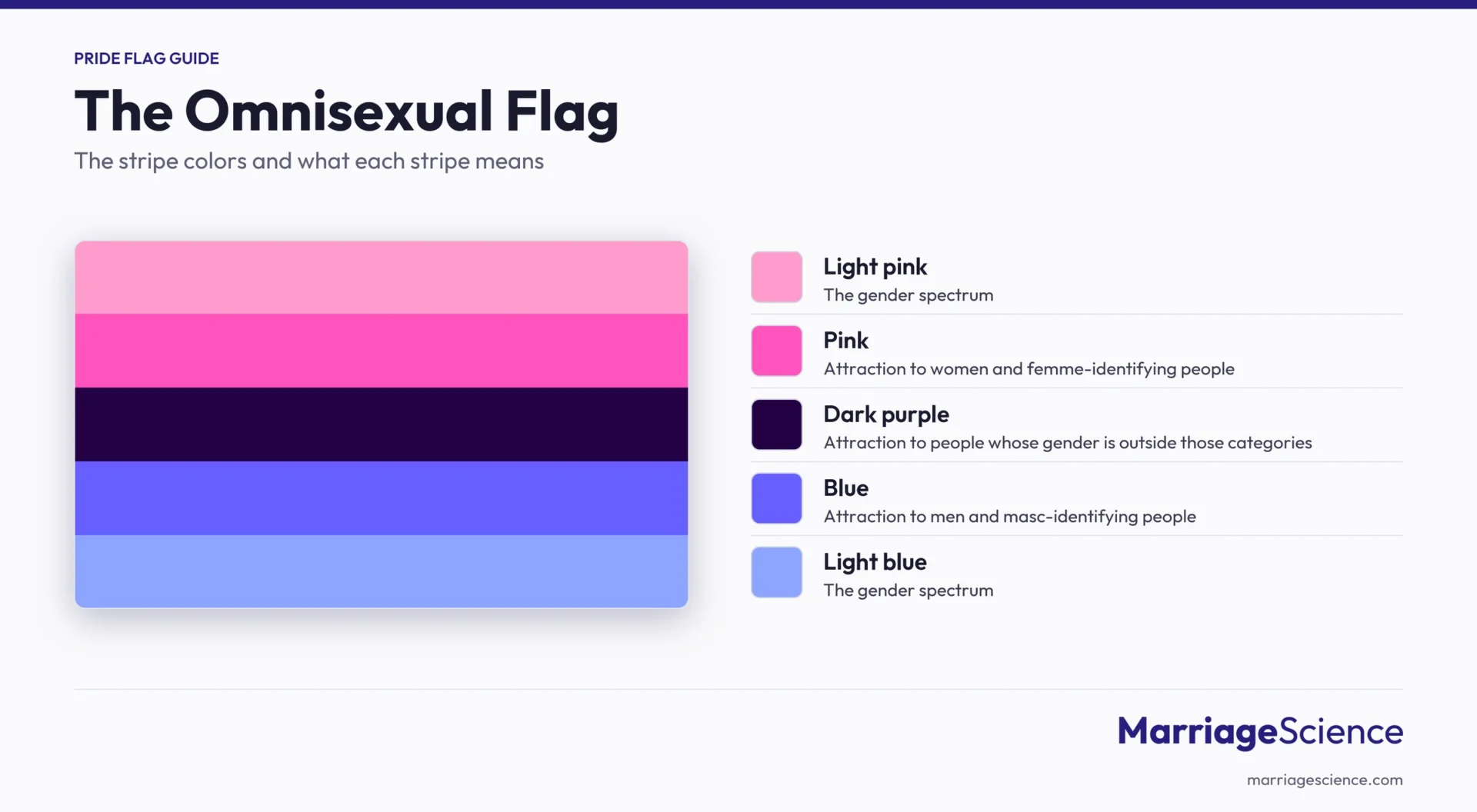
The report described the light pink and light blue stripes as representing the gender spectrum. Pink represents attraction to women and femme-identifying people, blue represents attraction to men and masc-identifying people, and dark purple represents attraction to people whose gender falls outside those categories.
The flag is newer and less widely known than the pansexual flag, which uses pink, yellow, and blue.
How Common Is Omnisexuality? What Research Says
No study has measured how many people identify as omnisexual. That makes the question difficult to answer because surveys often leave the label out of their response options.
Surveys usually offer bisexual and pansexual as choices, while people who use omnisexual may select one of those options or “other.” Without a separate count, we cannot say whether the identity is rare or common.
When research does name omnisexuality, it often places omnisexual people in a wider plurisexual group. Plurisexual means attraction to more than one gender, so the category may include bisexual, pansexual, omnisexual, and other related identities.
Houghtaling, Manning and Kamp Dush published a 2024 study in the Journal of Homosexuality that examined COVID-19 coping by sexual and gender identity in a nationally representative sample. In research like this, omnisexual people may be grouped with bisexual, pansexual, and other plurisexual people, so the findings describe the combined group.
Findings about bi+ groups describe the group as a whole. They do not tell us about any individual omnisexual person, including who they date, how they describe attraction, or which label feels most accurate to them.
This gap matters because identity terms can mean different things to different people, and broad survey categories can hide those differences. Researchers need more data that counts omnisexual people separately.
Frequently Asked Questions
What Does Omnisexual Mean in Simple Terms?
Omnisexual means attraction to people of all genders, with gender still playing a part. That can mean someone is able to feel attraction to women, men, nonbinary people and people of other genders, while still noticing gender as part of how attraction feels or shows up.
Are Omnisexual and Pansexual the Same Thing?
Omnisexual and pansexual both mean attraction to all genders, but they are often described in different ways. Pansexual is often described as gender blind, while omnisexual is often described as gender aware, and some people use the two words as synonyms when both feel right.
Can Omnisexual People Have a Gender Preference?
Yes, omnisexual people can have a gender preference, and it is common. A preference can mean a stronger pull toward one gender, a more frequent pull, or a different kind of pull, while the person can still be attracted to people of all genders.
Is Omnisexual Part of Bisexual?
Yes, omnisexual sits under the bi+ umbrella. GLAAD in 2017 listed omnisexual among the words people attracted to any gender use, which places it alongside other bi+ words people may choose for themselves.
What Is the Difference Between Omnisexual and Polysexual?
Omnisexual means attraction to all genders, while polysexual means attraction to many genders without requiring attraction to all genders. Someone who is polysexual may be attracted to several genders, and someone who is omnisexual is describing attraction that includes all genders.
What Do the Omnisexual Flag Colors Mean?
The omnisexual flag colors are usually explained as light pink and light blue for the gender spectrum, pink for attraction to women and femme people, blue for attraction to men and masc people, and dark purple for genders outside those categories. The color meanings focus on both attraction and gender.
How Do I Know if I’m Omnisexual or Pansexual?
Ask whether gender shapes your attraction. If it does, omnisexual may fit better, and you can use both words if each one helps you describe your experience to yourself or to other people.
What to Take Away
Omnisexual is a real label under the bi+ umbrella. If it helps you describe attraction to people of all genders, with gender still feeling visible or meaningful in that attraction, you can use it without having to prove it to anyone.
The pan versus omni question often comes down to how gender feels in your own attraction. If pansexual feels like the better fit, that is okay.
If omnisexual feels right, that is okay too. The label is yours to use, change, or leave, and you can take your time before deciding how you want to describe yourself.