


Gen Z is dating less than any generation before it, and the data backs up the headlines. More than half of single Gen Z adults are not even looking, sexual activity has dropped to about half the 1990 rate for their age, and dating app burnout is the norm rather than the exception. Yet the same generation says it wants deeper, more intentional connection. This page collects more than 40 Gen Z dating statistics on apps, sex, situationships, marriage plans, and the reasons young people are stepping back, drawn from Pew Research Center, the Institute for Family Studies, Hinge’s 2025 Gen Z report, and what daters say on Reddit and other forums. Every figure shows its source and year.
Key Gen Z Dating Statistics
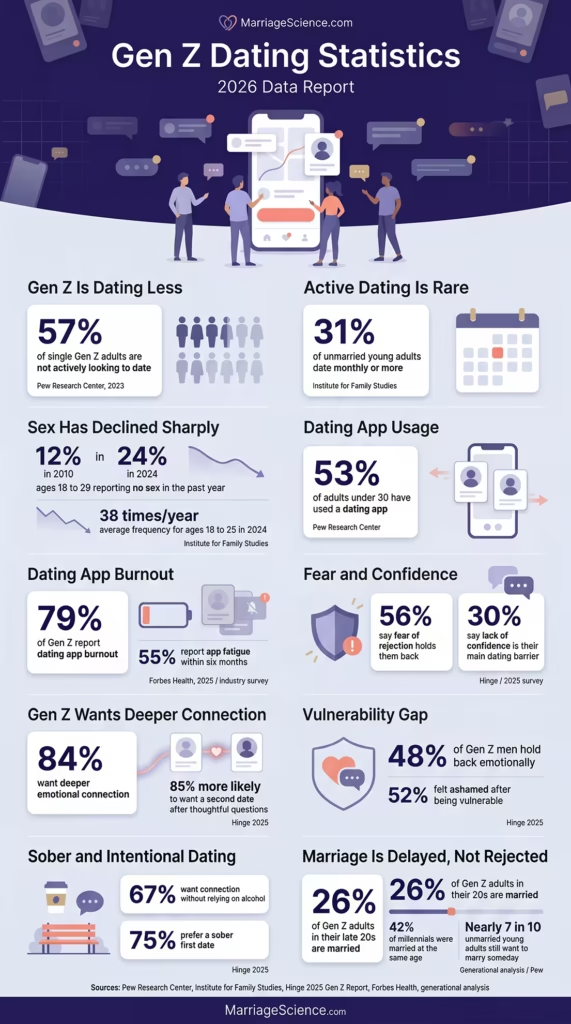
- About 57% of single Gen Z adults aged 18 to 29 are not actively looking for a relationship or casual dates, the highest single-and-not-looking rate on record (Pew Research Center, 2023).
- Only about 31% of unmarried young adults aged 22 to 35 are actively dating once a month or more (Institute for Family Studies).
- The share of adults aged 18 to 29 reporting no sex in the past year doubled from 12% in 2010 to 24% in 2024 (Institute for Family Studies).
- Gen Z adults aged 18 to 25 had sex about 38 times a year in 2024, roughly half the rate of the same age group in 1990 (Institute for Family Studies).
- About 53% of adults under 30 have used a dating app, the highest share of any age group (Pew Research Center).
- About 79% of Gen Z report burnout from dating apps, and more than half feel burned out often or always (Forbes Health, 2025).
- About 55% of Gen Z report dating app fatigue within six months of use (industry survey, 2025).
- About 56% of Gen Z say fear of rejection keeps them from pursuing relationships, a higher rate than millennials (Hinge).
- About 30% of Gen Z say lack of confidence is their main barrier to dating, twice the millennial rate (survey, 2025).
- About 84% of Gen Z daters say they want new ways to build deeper emotional connections (Hinge 2025 Gen Z report).
- About 48% of Gen Z men hold back from emotional intimacy for fear of seeming too much, and 52% felt ashamed after being vulnerable (Hinge, 2025).
- Among heterosexual Gen Z daters, 49% of women hesitate to start serious conversations versus 17% of men, while 65% of men say they want meaningful early conversations (Hinge, 2025).
- About 67% of Gen Z want romantic connections without relying on alcohol, and 75% prefer a sober first date (Hinge, 2025).
- About 60% of younger Gen Z, aged 18 to 22, are open to AI help with dating (Hinge, 2025).
- Only about 26% of Gen Z adults in their late 20s are married, well below the 42% of millennials at the same age (generational analysis).
- Nearly 7 in 10 unmarried young adults say they want to get married someday (Pew Research Center).
- Daters were 85% more likely to want a second date when asked thoughtful questions, yet only about 30% felt their dates asked enough (Hinge, 2025).
- About 71% of Gen Z say marriage is important, but only 36% say it is very important, down from 50% of millennials (survey, 2025).
- About 1 in 10 partnered adults met through a dating app, with higher rates among younger and LGB adults (Pew Research Center).
- The Hinge Gen Z report surveyed about 30,000 daters worldwide (Hinge, 2025).
Is Gen Z Dating Less? Yes, and by a Lot
The single clearest fact about Gen Z dating is that there is less of it. About 57% of single Gen Z adults aged 18 to 29 are not actively looking for a relationship or even casual dates, the highest single-and-not-looking rate Pew Research Center has ever recorded for that age group (2023).
Active dating is rare even among those open to it. Only about 31% of unmarried young adults aged 22 to 35 go on a date once a month or more (Institute for Family Studies). For the wider market this sits in, see our dating app statistics and the full relationship and dating statistics hub.
This is a real break from past generations. Earlier cohorts paired off earlier and dated more often at the same age, so the pullback reflects a genuine change in how young adults spend their twenties, not only a later start.
| Metric | Value | Source |
| Single Gen Z (18 to 29) not looking to date | 57% | Pew Research Center, 2023 |
| Young adults (22 to 35) dating monthly or more | ~31% | Institute for Family Studies |
Gen Z and Sex: The Steepest Decline
Less dating shows up directly in less sex. The share of adults aged 18 to 29 reporting no sex in the past year doubled from 12% in 2010 to 24% in 2024, the steepest drop of any age group (Institute for Family Studies).
Frequency has fallen just as sharply. Gen Z adults aged 18 to 25 had sex about 38 times a year in 2024, roughly half the rate of the same age group in 1990. For how this continues into marriage, see our sexless marriage statistics.
Researchers tie the decline to less partnership, more time online, rising anxiety, and shrinking in-person social lives. The pattern holds across gender, race, and education, which points to broad cultural causes rather than any single one.
| Metric | Value | Source |
| 18 to 29 with no sex in past year, 2010 | 12% | IFS |
| 18 to 29 with no sex in past year, 2024 | 24% | IFS |
| Sex per year, ages 18 to 25, 2024 | ~38 times | IFS |
| Change vs 1990 | About half | IFS |
Gen Z Dating App Usage
Gen Z uses dating apps more than any other age group, even as it complains about them most. About 53% of adults under 30 have used a dating app (Pew Research Center), well above the rates for older groups.
But usage and enthusiasm have split. Many young users keep an app installed while barely opening it, treating it as a backstop rather than a main route to meeting people. The result is high reach but low satisfaction, a tension that defines Gen Z’s relationship with the apps.
Platform choice splits by intent. Younger Gen Z leans toward Hinge and newer apps built around prompts, while Tinder remains the entry point for casual dating, a divide we cover in our Hinge statistics.
| Metric | Value | Source |
| Adults under 30 who have used a dating app | 53% | Pew Research Center |
| Rank among age groups | Highest | Pew Research Center |
Dating App Fatigue and Burnout
Burnout is close to universal. About 79% of Gen Z report burnout from dating apps, and more than half say they feel burned out often or always, the highest share of any age group (Forbes Health, 2025).
It sets in fast. Around 55% of Gen Z report dating app fatigue within six months of use. Users point to endless swiping, ghosting, low-effort messages, and the pressure to perform, and many cycle through deleting and reinstalling the apps.
The fatigue is reshaping behavior. Some young daters are moving toward in-person events, hobby groups, and matchmaking, while others are stepping back from dating altogether for a while, a trend the press has labeled solo-maxxing.
| Metric | Value | Source |
| Gen Z reporting dating app burnout | ~79% | Forbes Health, 2025 |
| Burned out often or always | More than half | Forbes Health, 2025 |
| Report fatigue within 6 months | ~55% | Industry survey, 2025 |
Situationships and the Talking Stage
Gen Z has its own vocabulary for ambiguity. The situationship, a romantic arrangement without a clear label or commitment, has become a default for many young people, offering low pressure but often producing confusion and mixed signals.
Before a situationship there is usually the talking stage, an extended period of texting where it is unclear whether two people are dating. Both patterns let young daters avoid the risk of defining things, but they also leave many stuck, unsure how to move a connection forward.
These arrangements are not always unwanted. For some, a situationship is a deliberate low-commitment choice during busy years, but surveys consistently find that one partner usually wants more clarity than the other, which is where the friction comes from.
Fear of Rejection and Confidence
Underneath the trends is a confidence problem. About 56% of Gen Z say fear of rejection keeps them from pursuing relationships, a higher rate than millennials report (Hinge), and over half say they have held back from telling someone how they feel for fear of pushing them away.
Confidence is the most cited barrier. About 30% of Gen Z name lack of confidence as their main obstacle to dating, roughly twice the millennial rate. Growing up on social media, with constant comparison and public judgment, appears to have raised the perceived stakes of any romantic risk.
The effect compounds. Less practice dating makes each attempt feel higher stakes, which leads to more avoidance, a loop that helps explain why so many young adults describe dating as draining before it even begins.
| Metric | Value | Source |
| Say fear of rejection holds them back | ~56% | Hinge |
| Say lack of confidence is the main barrier | ~30% | Survey, 2025 |
Gen Z Men vs Women
Gen Z men and women often experience dating very differently. On the apps, a male-skewed user base means many young men get few matches while many young women feel overwhelmed, a mismatch that breeds frustration on both sides.
Communication styles diverge too. In Hinge’s 2025 data, 49% of heterosexual Gen Z women hesitate to start serious conversations and prefer the other person to go first, versus 17% of men, while 65% of Gen Z men say they actually want meaningful conversations early on. The gap helps explain why so many connections stall before they start.
A wider values gap adds friction. Recent surveys find young men and women drifting apart on politics and expectations, which makes an already thin dating pool feel harder to manage for both.
| Metric | Value | Source |
| Het. women hesitating to start serious talk | 49% | Hinge 2025 |
| Het. men hesitating to start serious talk | 17% | Hinge 2025 |
| Men wanting meaningful early conversation | 65% | Hinge 2025 |
How Gen Z Meets Partners
When Gen Z does couple up, the path has changed. About 1 in 10 partnered adults overall met through a dating app, with higher rates among younger and LGB adults (Pew Research Center), while meeting through friends, school, or work has slipped.
In-person meeting has not vanished, though. As app fatigue grows, many young people say they would rather meet through shared activities, friends, or events, and some are actively seeking offline ways to date. For where the apps still fit, see the best dating sites.
| Metric | Value | Source |
| Partnered adults who met via an app | ~1 in 10 | Pew Research Center |
| Rate among younger and LGB adults | Higher | Pew Research Center |
What Gen Z Wants: Intentional, Sober Dating
For all the pullback, Gen Z is not anti-romance. In Hinge’s 2025 Gen Z report, based on about 30,000 daters worldwide, 84% said they want new ways to build deeper emotional connections, and daters were 85% more likely to want a second date when asked thoughtful questions.
The catch is a gap between wanting depth and showing it. About 48% of Gen Z men hold back from emotional intimacy for fear of seeming too much, and 52% said they felt ashamed after being vulnerable, while only about 30% felt their dates asked enough questions.
The shift also shows up in how they date. About 67% of Gen Z want to build connections without relying on alcohol, and 75% prefer a sober first date, part of a wider move the press calls dry dating. About 60% of younger Gen Z are even open to AI help with dating.
| Metric | Value | Source |
| Want deeper emotional connections | 84% | Hinge 2025 |
| Men holding back to avoid seeming too much | 48% | Hinge 2025 |
| Felt ashamed after being vulnerable | 52% | Hinge 2025 |
| Want connection without relying on alcohol | 67% | Hinge 2025 |
| Prefer a sober first date | 75% | Hinge 2025 |
| Younger Gen Z open to AI dating help | 60% | Hinge 2025 |
Gen Z, Marriage, and the Future
Marriage is being delayed, not discarded. Only about 26% of Gen Z adults in their late 20s are married, well below the 42% of millennials at the same age (generational analysis), yet nearly 7 in 10 unmarried young adults say they still want to marry someday (Pew Research Center).
What has changed is urgency. About 71% of Gen Z say marriage is important, but only 36% call it very important, down from 50% of millennials. Young adults increasingly see marriage as something to reach after education, career, and financial stability rather than a foundation to build on.
Money frames the timeline. Many young adults say they want to be financially secure before marrying, and with high housing costs and student debt, that point arrives later, pushing marriage into the thirties for a growing share.
| Metric | Value | Source |
| Gen Z in late 20s who are married | ~26% | Generational analysis |
| Millennials at same age | 42% | Generational analysis |
| Unmarried young adults who want to marry someday | Nearly 7 in 10 | Pew Research Center |
| Say marriage is very important | 36% | Survey, 2025 |
What Gen Z Says on Reddit and Forums
Surveys capture the scale, but forums capture the mood. On Reddit communities such as r/GenZ, r/dating, and r/datingoverthirty, and in long threads on other forums, a few themes repeat.
Young daters describe being stuck in talking stages that go nowhere, getting caught in situationships they did not want, and feeling worn down by apps where matches rarely turn into dates.
Many posts weigh the cost of dating, with people noting that a single night out can run well over a hundred dollars, which feeds the move toward cheaper or sober meetups. Others describe quitting apps for months, going boysober or focusing on themselves, then drifting back when loneliness sets in.
The mood is not anti-relationship at all; it is closer to exhaustion, a sense that modern dating asks for a lot of effort and emotional risk for an uncertain payoff. None of this is a representative sample, but it lines up closely with the survey data on fatigue and fear of rejection above.
Why Gen Z Dates Less: The Drivers
No single cause explains the pullback. The most cited factors are phones and social media, which absorb the unstructured time and in-person contact that dating used to fill, along with rising rates of anxiety and depression that make romantic risk feel heavier.
Money and time matter too. Many young adults face high housing costs, student debt, and unstable schedules, and a generation that socializes less in person has fewer natural ways to meet people. Add app fatigue and a fear of rejection sharpened by public comparison, and the result is a generation that wants connection but approaches it slowly.
The pandemic accelerated all of it. Lockdowns cut years of normal socializing for people in their late teens and early twenties, and many say they never fully rebuilt the in-person habits that dating depends on.
Methodology and Sources
Every figure on this page comes from a named primary source, not from content-marketing roundups. The Reddit and forums section reflects recurring themes in public discussions and is marked as qualitative, not a representative survey. Figures are updated as new data is released.
- Pew Research Center, online dating and young-adult surveys
- Institute for Family Studies, sex and dating analyses of General Social Survey data
- Hinge 2025 Gen Z report (about 30,000 daters)
- Forbes Health, dating app burnout survey (2025)